
Why Google Calendar Booking Systems Double-Book
Why Google Calendar booking automations can double-book, and where the workflow needs stronger safeguards.
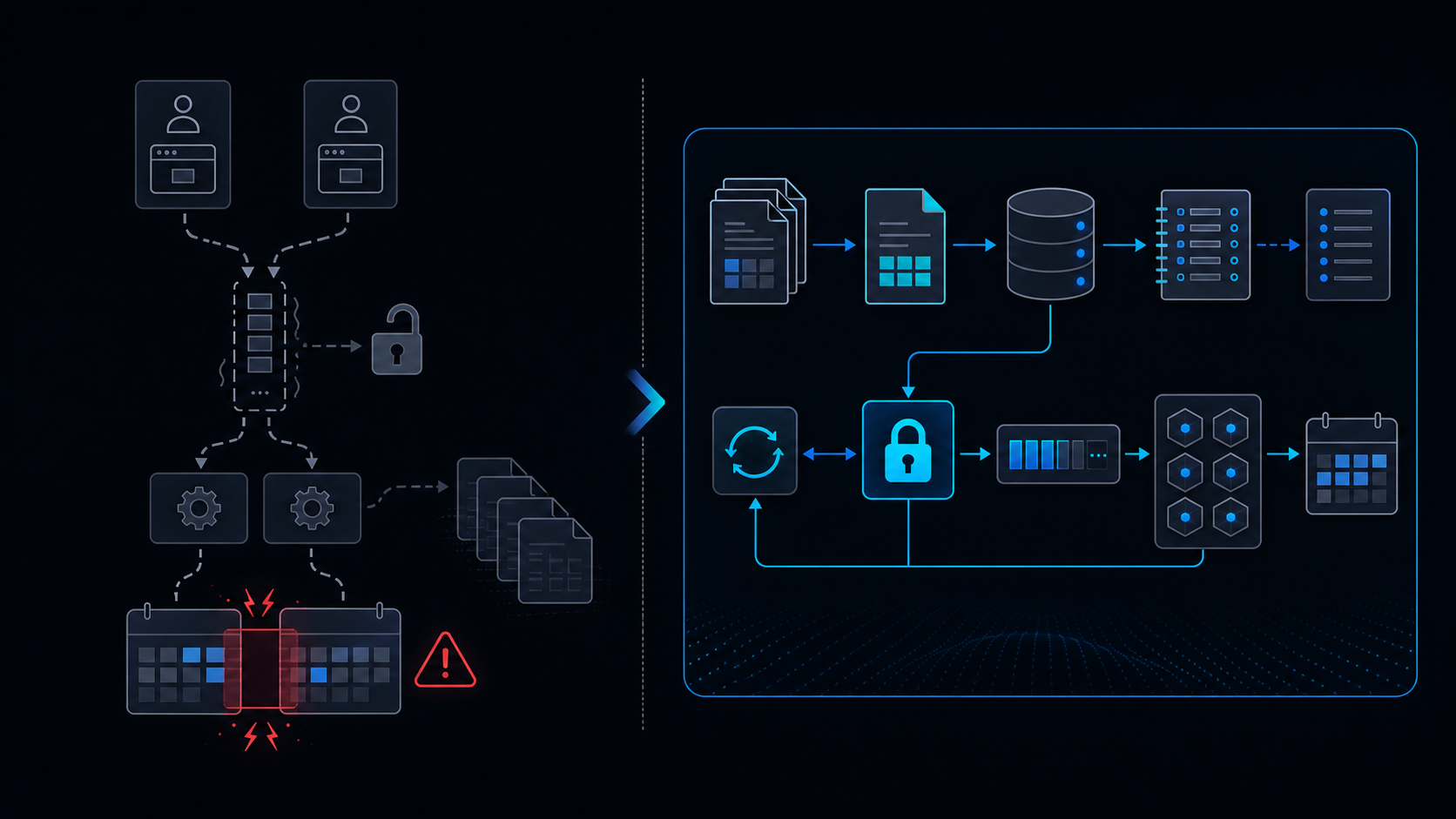
Conclusion first: The classic check-then-insert pattern always creates a race condition because of Google Calendar’s eventual consistency. LockService alone is insufficient; you need a dedicated slot-ledger sheet, idempotency keys, and post-insert verification against the Calendar event ID.
1. Exact mechanism of double-booking
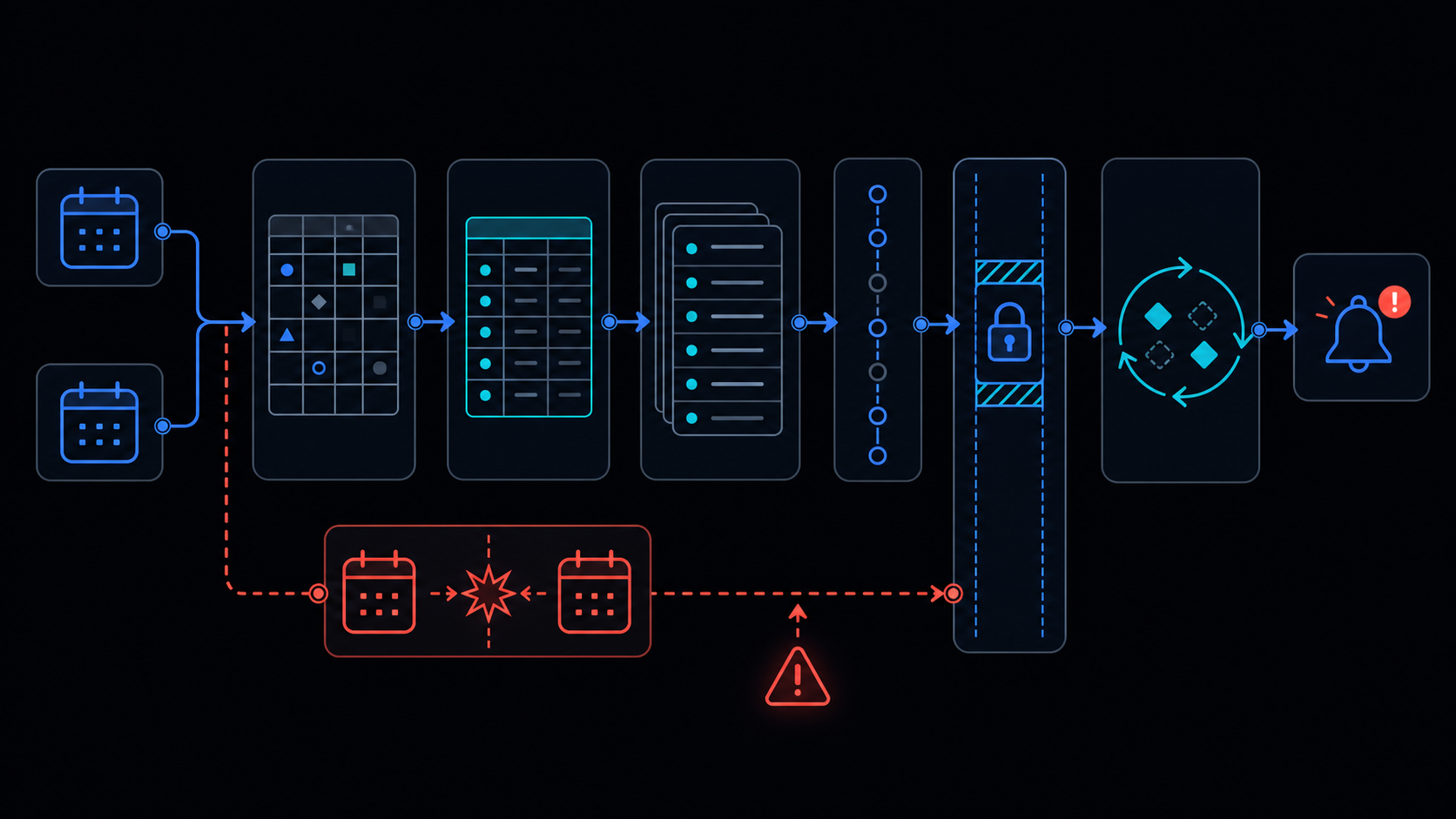
2. Race-condition analysis of check-then-insert
3. Limits and correct usage of LockService
4. Slot-ledger sheet design
| Column | Type | Purpose |
|---|---|---|
| slot_id | string | YYYYMMDD-HHMM-RESOURCE |
| status | string | FREE / RESERVED / COMMITTED |
| idempotency_key | string | UUID or hash |
| calendar_event_id | string | Returned by Calendar API |
Checklist:
- UPDATE row under lock
- Record COMMITTED only after successful Calendar insert
- Rollback + retry on failure
5. Idempotency-key code skeleton
function bookSlot(slotId, userId) {
  const lock = LockService.getScriptLock();
  if (!lock.tryLock(30000)) throw new Error('lock timeout');
  try {
    const key = Utilities.getUuid();
    // 1. check FREE in sheet
    // 2. Calendar.Events.insert
    // 3. write COMMITTED + key
  } finally { lock.releaseLock(); }
}
6. Calendar eventual consistency and failure modes
After Calendar insert, read-your-writes consistency can take 2–8 seconds. Always re-verify with the returned event ID.
7. When not to use this approach
Final review criteria
The useful question is not how many features the automation has. It is whether the workflow can be understood, recovered, and safely rerun after something goes wrong.
- Raw input is separated from the human-facing working view.
- Each run records success, failure, processed count, and error message.
- Replaying the same input does not create duplicate results.
- Permission changes, quota errors, and external API failures are visible later.
For low-risk internal tasks, that may be enough. For customer replies, booking confirmation, inventory updates, payments, or legal records, the threshold is higher: compare Apps Script against a dedicated SaaS or a small server-backed system before relying on it.
Frequently asked questions
- Does LockService still allow double-bookings?
- Yes. LockService only serializes script execution and does not prevent Calendar API eventual consistency or sheet-to-calendar drift. A slot ledger plus idempotency keys are required.
- Will a sheet ledger kill performance?
- No. With dropdown caching and query views, p95 latency stays under 200 ms. Respect the 6-minute limit and quota ceilings by using batch writes and exponential backoff.
- When should I switch to dedicated SaaS?
- Switch when concurrent users exceed ~30, booking rate exceeds 5 per second, or Calendar API 403/429 errors become frequent. Self-hosted GAS hits hard limits.